Benefits of Plant-Based Eating for Waste Reduction Lower Climate Footprint and Improved Health
Eating habits shape not only our health but also the planet’s future. Shifting toward a plant-based diet offers a powerful way to reduce food waste, lower greenhouse gas emissions, and improve personal well-being. Research by Joseph Poore and Thomas Nemeček highlights how food production and consumption choices impact the environment, showing that plant-based eating can play a key role in creating a sustainable food system.

How Plant-Based Eating Reduces Food Waste

Food waste is a major global problem. Roughly one-third of all food produced is lost or wasted, contributing to unnecessary resource use and emissions. Plant-based diets can help reduce this waste in several ways:
Longer shelf life of many plant foods compared to animal products, which spoil faster.
More efficient use of crops since plant foods can be consumed directly rather than being fed to animals first.
Simpler supply chains for many fruits, vegetables, grains, and legumes, which reduces losses during transportation and storage.
Joseph Poore’s research shows that animal agriculture requires significantly more land, water, and energy per calorie produced than plant-based foods. This inefficiency means more food is wasted along the way. By choosing plants, consumers and producers can cut down on the volume of food lost before it reaches the plate.
Lowering Climate Footprint with Plant-Based Choices
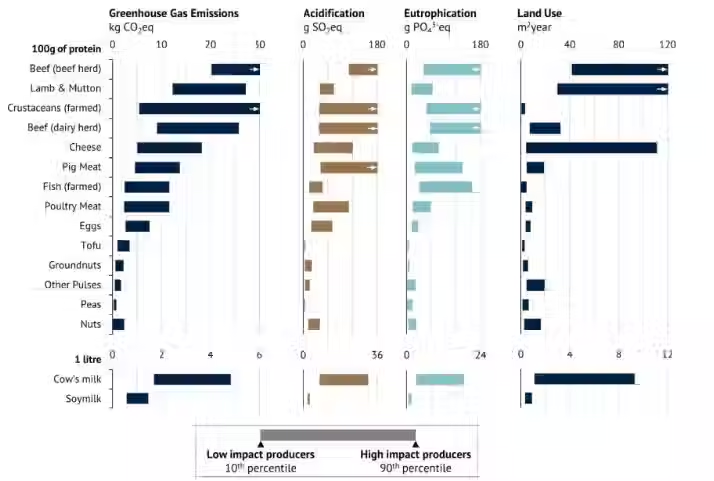
Food production accounts for about 26% of global greenhouse gas emissions. Animal-based foods, especially beef and lamb, have the highest carbon footprints. Poore’s comprehensive study of food systems worldwide found that:
Producing 1 kilogram of beef emits up to 60 kilograms of CO2-equivalent gases.
Plant-based proteins like beans and lentils emit less than 5 kilograms of CO2-equivalent per kilogram.
Shifting diets toward plants could reduce food-related emissions by up to 70%.
Thomas Nemeček’s work complements this by analyzing consumer behavior and producer practices, showing that demand for plant-based foods encourages more sustainable farming methods. These include crop rotation, reduced fertilizer use, and lower methane emissions from livestock.
By eating more plants, individuals can directly lower their personal climate impact. This change also signals to producers to adopt greener practices, creating a positive feedback loop for the environment.
Health Benefits of Plant-Based Eating
Beyond environmental gains, plant-based diets offer numerous health advantages. Studies consistently link higher consumption of fruits, vegetables, whole grains, nuts, and legumes with:
Lower risk of heart disease and stroke
Reduced incidence of type 2 diabetes
Better weight management
Improved digestive health
Plant-based diets tend to be rich in fiber, vitamins, and antioxidants while being lower in saturated fats. This combination supports long-term wellness and can reduce healthcare costs.
It is important to plan meals to ensure adequate intake of essential nutrients like vitamin B12, iron, and omega-3 fatty acids. Consulting with a healthcare provider or dietitian can help tailor a balanced plant-based diet.
Practical Tips for Transitioning to Plant-Based Eating
Making the switch to more plant-based meals can feel overwhelming, but small steps add up:
Start by replacing one or two meals per week with plant-based options.
Explore recipes featuring beans, lentils, tofu, and whole grains.
Shop seasonal and local produce to reduce food miles and waste.
Use leftovers creatively to minimize food thrown away.
Support brands and farmers committed to sustainable practices.
These habits not only benefit the planet but also introduce variety and new flavors to your diet.
Resources for Further Learning
For those interested in diving deeper, Joseph Poore’s research paper on the environmental impacts of food production is a valuable resource. Poore & Nemeček’s studies on consumer and producer behavior provide insights into how choices shape sustainability.
You can download our comprehensive PDF guide on plant-based eating and sustainability here:
and our easy plant powered cook book here
This guide offers meal plans, environmental data, and tips for reducing waste and emissions through diet.


Comments